Industries · Auto repair & collision
Auto repair and collision financing and payments
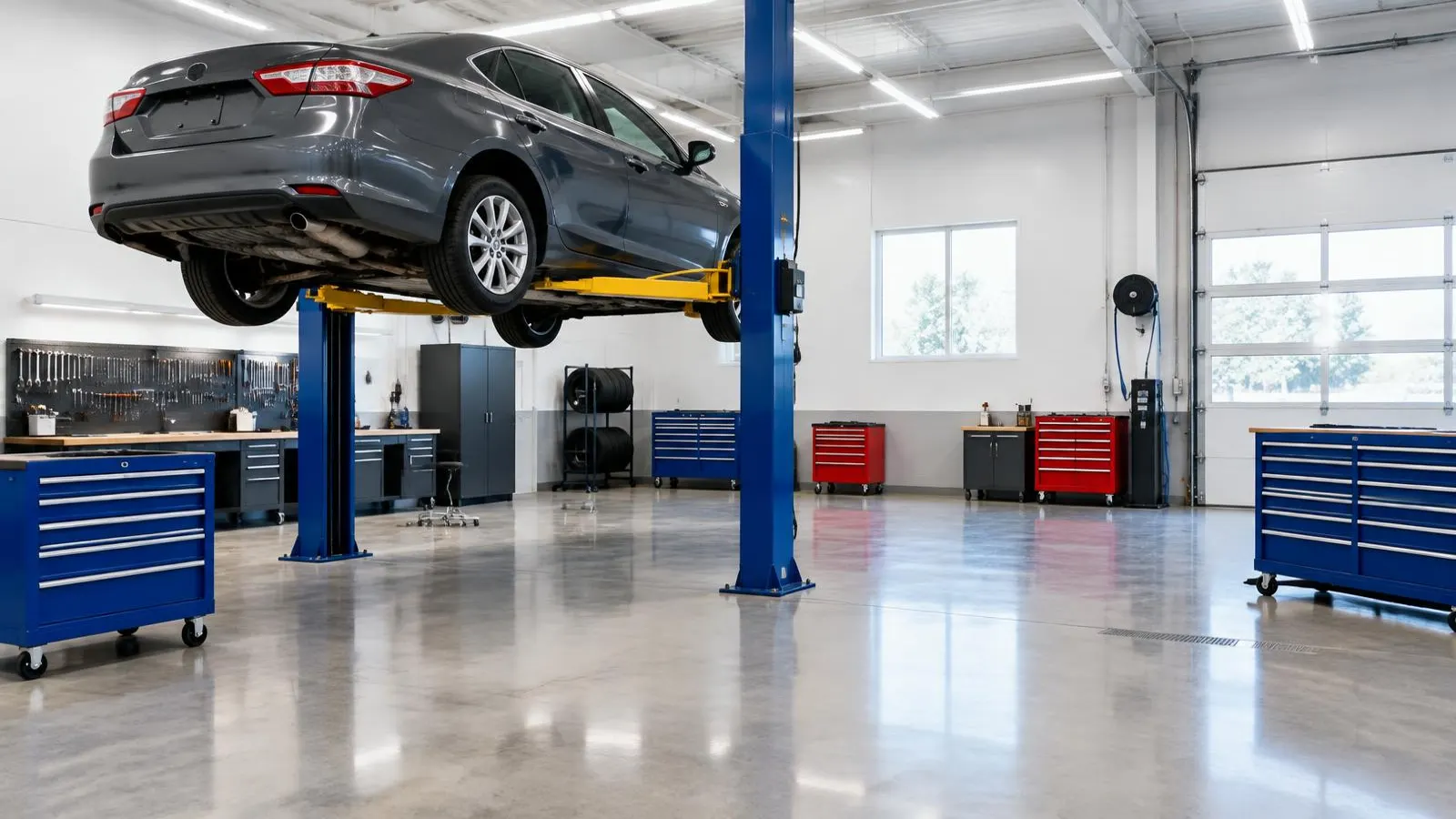
Auto repair and collision shops usually finance lifts, diagnostic equipment and paint booths, buy existing shops, and use working capital to carry parts and insurance receivables. Lenders look at car count, average repair order and technician retention.
Profit Theory is not a lender and may earn referral fees or commissions from the lenders and providers we work with. How we get paid: /referral-disclosure
Typical financing needs for auto repair and collision
Lifts, diagnostics and paint booths
Equipment financing for major shop equipment, often with the equipment as collateral.
Buying an existing shop
Acquisition loans sized to the shop's historical cash flow, often with real estate considered separately.
Insurance receivables and parts
Collision work can wait on insurer payments; a line can carry parts and payroll.
Worked example: $600,000 shop acquisition loan
Payment = P × r ÷ (1 − (1 + r)^−n), r = rate ÷ 12, n = years × 12
- • Acquisition model at 10% illustrative rate, 10-year term
- • Monthly payment ≈ $7,929
- • Annual debt service ≈ $95,149
- • Cash flow needed at 1.25x DSCR ≈ $118,936
- • Illustrative only. Estimates only. Results vary. No guarantee of approval, rates or savings.
Payments: what drives processing cost in auto repair and collision
- • High average repair orders paid by card
- • Insurance payments arriving separately from customer deductibles
- • Fleet accounts on net terms
Effective rate = total monthly processing fees ÷ monthly card volume × 100
- • Illustrative: $3,100 in fees ÷ $110,000 in card volume × 100 = 2.82%
- • Illustrative only. Your statement, card mix and pricing model determine your actual rate.
Auto repair and collision financing FAQ
What do lenders look at when buying a repair shop?
Typically historical cash flow, car count, average repair order, technician retention and the condition of equipment and real estate.
Can a paint booth be financed separately?
Yes, major equipment is commonly financed on its own. Terms depend on the equipment's life and the lender.
How do insurance payments affect cash flow?
Collision shops often wait on insurer payments; lenders review receivables aging when sizing a line of credit.
Does Profit Theory lend to auto repair and collision businesses?
No. Profit Theory is not a lender. A financing specialist helps you plan and package the request, then, with your consent, introduces you to providers we select based on fit. Lenders make every credit, rate and term decision.
What should I prepare before I apply?
Usually two to three years of business tax returns, year-to-date financial statements, a debt schedule, and a short explanation of what the money is for and how it will be repaid. The loan package checklist lists items by loan type.
Profit Theory is not a lender and may earn referral fees or commissions from the lenders and providers we work with. How we get paid: /referral-disclosure
Last reviewed Nov 3 2026